

Your Professional Ductile Iron Pipe Manufacturer!
Established in 2015, Taiyuan Jintai Technology Co., Ltd. stands out as a premier manufacturer specializing in the remanufacturing of hydraulic equipment. Our core focus lies in the production, sales, and maintenance of engineering hydraulic drive accessories, plunger pumps, motors, and reducer assemblies.
-

Ductile Iron Pipe Plug, Socket Plug, Blind Flange
Ductile iron fittings are indispensable in modern pipeline infrastructure, playing a critical role in various engineering fields. Produced using advanced casting techniques with ductile iron as the Add to Inquiry -
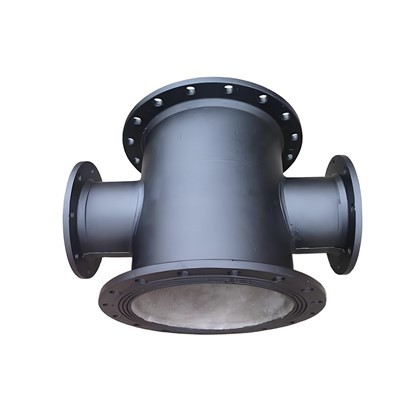
Epoxy Ductile Iron Di Pipe Fittings All Flanged Cross
Ductile iron fittings are crucial elements in modern pipeline infrastructure, providing essential support across various engineering applications. Produced using advanced casting methods and ductile Add to Inquiry -
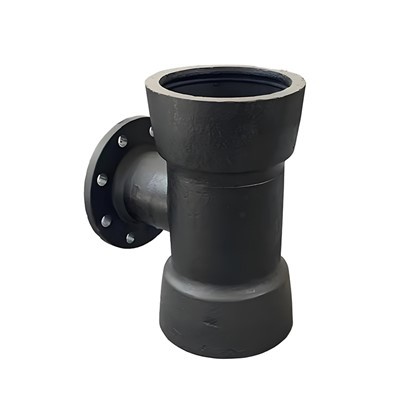
Ductile Iron Fittings Tee,Single Bottom Tee
$ 1200.00
Ductile iron fittings are crucial elements in modern pipeline infrastructure, playing a significant role in various engineering applications. Produced using advanced casting methods with ductile iron Add to Inquiry -
Ductile Iron Pipe Tee
$ 1000.00
Ductile iron fittings are vital components in modern pipeline systems, playing an essential role across various engineering sectors. Manufactured through advanced casting techniques with ductile iron Add to Inquiry -
Ductile Cast Iron Pipe Fittings Double Flange Short Pipe
$ 1700.00
Ductile iron fittings are essential components in modern pipeline systems, playing a vital role in various engineering applications. Manufactured through advanced production techniques with ductile Add to Inquiry -
45° 90° Elbow Socket Elbow Double Socket Elbow Double Coi...
$ 900.00
Ductile iron fittings, as an indispensable key component in modern pipeline systems, play a crucial role in many engineering fields. They are carefully cast using advanced production processes, with Add to Inquiry -
K7-K9 Pressure Class Ductile Iron Water Pipes Three-Axis ...
$ 1150.00
Ductile iron pipes, as an important member of the pipe materials sector, have been widely applied in various engineering projects due to their unique performance advantages. Below is a comprehensive Add to Inquiry



Why Choose Us
Rich Experience
Our company was established in 2014. After years of development and technological progress, our company has rich production and manufacturing experience and has become a premier manufacturer specializing in the remanufacturing of hydraulic equipment.
Custom Service
Specializing in engineering hydraulic drives, we have honed our technological expertise to provide personalized, customized services that cater to the diverse needs of our clientele.
Quality Control
By prioritizing technology and scientific processes in our operations, we ensure the production of reliable products that garner positive acclaim from users.
Cooperation Enterprises
We forging collaborative partnerships with enterprises nationwide, There are countries like Turkey, Argentina, Chile, Russia, Egypt, and Iran.
Advantages of Ductile Iron Pipe
Environmentally superior pipe
Ductile iron pipes are natural, safe, and sustainable. Ductile iron pipes contain at least 90% recycled materials with the pipes themselves being 100% recyclable.
Lower emissions and less energy
Ductile iron pipe has better environmental performance due to its lower greenhouse gas emissions in both the production and operation phases. From cradle-to-grave, Ductile iron pipe is superior environmentally, as it requires less energy to pump water and has a lower environmental impact.
Resilient
Ductile iron pipe is resilient through extreme weather events, natural disasters, soil contamination, and unpredictable situations. With its strength and durability, Ductile iron is the pipe of choice to protect against wildfires, earthquakes, floods, hurricanes, extreme temperatures, and the regular, ongoing stresses facing water utility systems.
Health and safety
Production of Ductile iron pipe does not release dangerous chemicals like vinyl chloride, dioxin or ethylene dichloride. Ductile iron pipe does not absorb toxins like plastic pipe and provides better protection against drinking water contamination. Ductile iron pipe is safer to install and maintain than plastic pipe, which is more prone to catastrophic installation and operational failures causing injuries to workers and damage to property.
Longer life cycle
Ductile iron pipe requires very little maintenance and has an expected service life of at least 100 years. Ductile iron pipe provides significant cost savings and benefits compared to plastic pipe, which has an average service life of 55 years. A longer life cycle saves money and is better for the environment. It also means fewer interruptions, fewer replacements, and more peace of mind for local communities.

Ductile Iron Composition
Usually, ductile iron is composed of 3.2 to 3.6% Carbon, 2.2 to 2.8% Silicon, 0.1 to 0.2% Manganese, 0.03 to 0.04% Magnesium, 0.005 to 0.04% Phosphorus, 0.005 to 0.02% Sulfur, Less than 0.4% Copper and Remaining (Around 94%) Iron. Additionally, tin or copper can be added to increase the strength of ductile iron at the expense of ductility. By adding chromium and nickel, the corrosion resistance of ductile iron can be improved. Also, to provide better oxidation protection Aluminum can be added replacing Silicon.
Product Specification
We offer the following Product specifications
|
Jointing |
Flange End / Socket End |
|
Available Size |
80mm - 800mm |
|
Available Fittings |
-90º / 45º / 22½º / 11¼º Bend |
|
Spigot & Socket Tyton Joint |
Diameters – 80mm to 1600mm Linings – cement mortar lining to DWI 31 (4) (a) plus epoxy seal coat up to 800mm OD, for EN 598, high alumina cement pipe Protection – zinc aluminium alloy with blue epoxy coating, P.W (red epoxy coating for sewage pipes) Uses – potable water and sewage sludge Pressure rating – 40 bar, with standard thrust blocks at the bends Joint type – Tyton push fit joint Fittings – Tyton D I fittings |
|
Spigot & Socket Tyton Anchor Joint |
Diameters – 80mm – 600mm Linings – cement mortar lining to DWI 31 (4) (a), for EN 598, high alumina cement pipe Protection – zinc aluminium alloy with blue epoxy coating (red epoxy coating for sewage pipes) Uses – potable water and sewage sludge |
|
Fabricated Flanged Pipework |
Diameters – 80mm to 1000mm Linings – cement mortar lining toDWI 31 (4) (a), for EN 598, high alumina cement pipe Protection – zinc aluminium alloy with blue epoxy coating (red epoxy coating for sewage pipes) Standard drilling is NP16 with NP10 and NP25 also available. The maximum length is 5800mm. Coatings for EN545 are cement lined internal and bitumen external, cement lined seal coated internal, blue epoxy internal. Coatings for EN598 are High Alumina Cement lined internal, red epoxy external. Other coatings are available on request. |
Types of Ductile Iron Pipe
The connections of ductile iron pipes are usually push-on joints or gland mechanical joints with rubber gaskets which have good leak prevention and ductility. No welding is required. The designed deflection is 3~5 °, so the number of fittings required can be reduced.
There are various types of joints for ductile iron pipes and fittings, each type are dependent on dimensions or specific client requirements. The main types are push on (T type), K type, self-anchored or flanged.
The push on (T type) utilizes a single rubber sealing gasket assuring a tight, permanent seal. This type joint is easy to assemble, eliminates the need for fasteners and is also fast to install. The rubber gasket fits inside the contour of the bell socket. The plain-end (spigot) of each pipe is bevelled to further ease assembly.
The K type, mechanical joint is a bolted joint utilising a ductile iron gland and mechanical joint gasket. The mechanical joint is used for water service where many connections are required. All components of the mechanical joint are interchangeable. The spigot end of mechanical joint pipe has the same outside diameter as the push-on joint pipe. As a result, it can be fitted into such joints in the field by bevelling the outside edge.
Self-restrained type is a push-in self anchored joint. The principle of joint anchoring consists in transmitting the axial forces from one pipeline to the following one, thus ensuring that the joint does not come apart. Self-restrained joints combine the advantages of flexible joint pipes and welded joint pipes. Self-anchored joints allow the axial thrusts arising at particular points (bends, tapers, tees, blank flanges) to be distributed over one or more pipes, thus avoiding installation of concrete anchor blocks.

Application of Ductile Iron Pipe
Water Supply
With their ability to endure high water pressure and resist corrosion and external impacts over prolonged periods, they are highly suitable for a diverse range of fluid transmission applications.
Wastewater and Sewage
Ductile iron pipes are widely employed in sewerage and wastewater systems, offering efficient and continuous flow with minimal internal blockages. These pipes find specific applications in wastewater treatment plants, industrial wastewater disposal, force mains, manholes, access points, and combined sewer systems.
Fire Protection
These pipes find extensive application in various components of fire protection, including sprinkler systems, fire hydrants, fire mains, fire pumps, fire suppression systems, standpipe systems, and high-rise fire protection.
Mining or Quarrying
These pipes are also utilized for transporting water and various materials, including slurries composed of solid particles suspended in water, from mining and quarry sites. Since they demonstrate exceptional durability and resistance to corrosion, it makes them well-suited to handle abrasive substances and withstand the harsh environmental conditions typically encountered in mining operations.
Gas Distribution
Ductile iron pipes are extensively utilized in gas distribution systems due to their remarkable strength, durability, and resistance to external elements. These pipes play a crucial role in transporting and distributing natural gas, ensuring a safe and dependable supply of this vital energy source to residential, commercial, and industrial sectors.
Craftsmanship of Ductile Iron Pipe
Ductile iron is produced by adding a closely controlled amount of magnesium alloy to a molten iron of low phosphorous and low sulfur content. The magnesium alloy addition produces a remarkable change in the microstructure by causing the carbon in the iron to assume a spheroidal or nodular shape, (as contrasted to the flake form of graphite in gray cast iron), and at the same time producing a finer grained iron matrix in the surrounding ferrite structure. As a result of this remarkable change, a far stronger, tougher, and ductile material is obtained. In addition to the benefits of long life, corrosion resistance, high structural strength, and tight joints, ductile iron is also readily machinable, an important requirement in any pipe that must be drilled, tapped or cut.
As one of the leading ductile iron pipe enterprises in China, we warmly welcome you to buy high-grade ductile iron pipe for sale here from our factory. All our products are with high quality and competitive price.
Mixer Truck Hydraulic Pump 4623, PMB P90 Mixer Truck Hydraulic Pump, PV090 Mixer Truck Hydraulic Pump