


Established in 2015, Jinzhong Tailik Hydraulic Machinery Co., Ltd. stands out as a premier manufacturer specializing in the remanufacturing of hydraulic equipment. Our core focus lies in the production, sales, and maintenance of engineering hydraulic drive accessories, plunger pumps, motors, and reducer assemblies. What sets us apart is our unwavering commitment to delivering top-tier products, underscored by a comprehensive and user-friendly service approach. Specializing in engineering hydraulic drives, we have honed our technological expertise to provide personalized, customized services that cater to the diverse needs of our clientele.

01
Rich Product Variety
Our main products include engineering hydraulic drive accessories, plunger pumps, motors, and reducer assemblies and other engineering equipment.
02
High Quality
By prioritizing technology and scientific processes in our operations, we ensure the production of reliable products that garner positive acclaim from users. Our products are distinguished by an exceptional blend of high performance and cost-effectiveness, making them a standout choice in the market.
03
Rich Experience
Our company was established in 2014. After years of development and technological progress, our company has rich production and manufacturing experience and has become a premier manufacturer specializing in the remanufacturing of hydraulic equipment.
04
Leading Service
We have many years of industry experience and a complete production management, quality supervision, sales service operation system. Whether you want to buy engineering hydraulic drive accessories or plunger pumps, just send your requirements by email and we can customize the product for you.

Concrete Mixing PV23 Hydraulic Piston Pump
With a sophisticated piston design and top-notch materials, the PV23 pump stands out as a reliable performer, ensuring consistent and seamless operation. This makes it the preferred option for a wide range of applications, including construction equipment, manufacturing machinery, and hydraulic systems across various industries. Its sturdy build guarantees durability even in demanding conditions, and its compact design facilitates flexible integration into diverse hydraulic setups.

7.1R120CP Mixer Truck Planetary Reducer
The 7.1R120CP reducer is a product specially designed for mixer trucks with water tank equipment. There is a mounting position specially designed for the water pump at the front end of the reducer. This design is to facilitate the pressurization of the water in the water tank and make water addition more convenient. The 7.1R120CP mixer truck reducer also has a series of other features and advantages, such as being made of high-strength materials and being able to withstand high torque and load. The precision-machined gears enable the reducer to ensure high meshing accuracy and transmission efficiency. Oil bath lubrication ensures that the gears and bearings are fully lubricated.
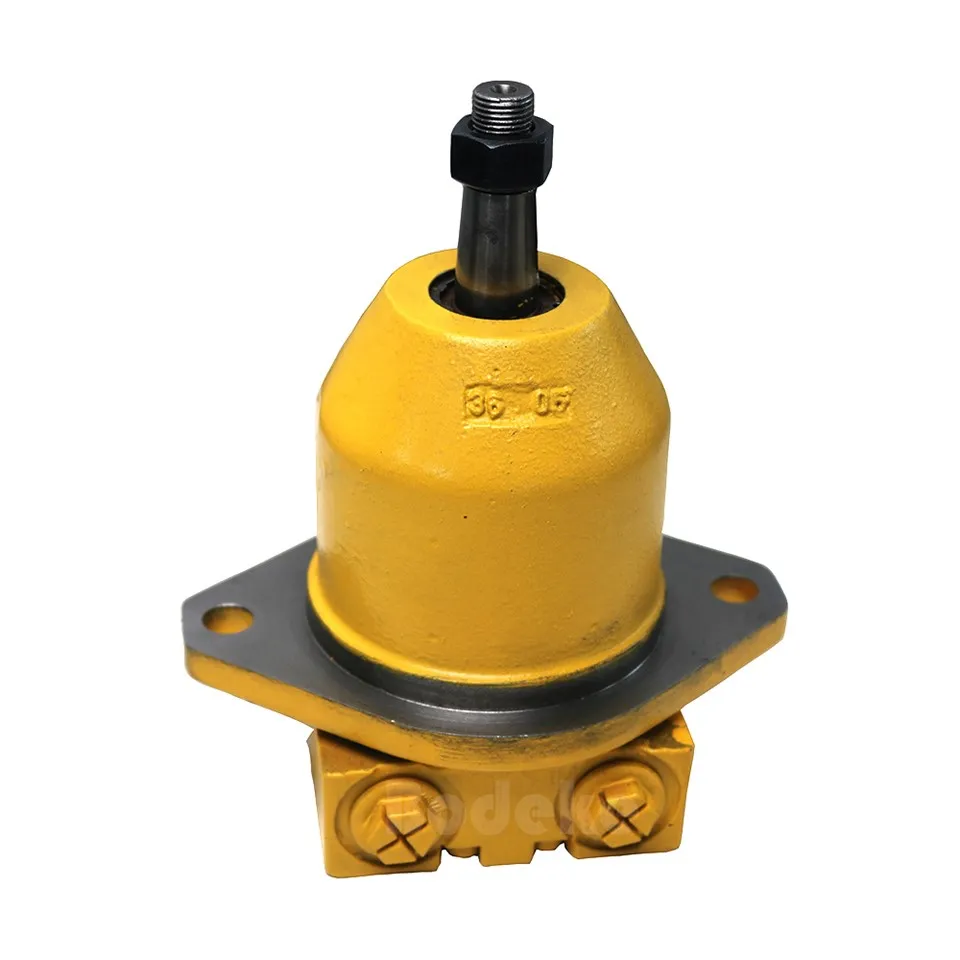
A2FM18/FLE10 Motor for Excavator Spare Parts
The A2FM18 Fan motor excels in applications requiring high starting torque, such as load hoist winch drives, swing drives, and propulsion drives. Its high starting torque efficiency allows it to manage heavy loads smoothly without causing pressure spikes, sudden jerks, or instantaneous horsepower surges. The A2FM18 motor maintains high volumetric efficiency from the beginning of its operational life and retains this efficiency throughout its use. Even at very low speeds, such as in swing and load hoist drives, the motor demonstrates minimal torque ripple.

A hydraulic oil cooler is a device used in hydraulic systems. Its main function is to ensure efficient operation of the system and extend the service life of the equipment by reducing the temperature of the hydraulic oil. In a hydraulic system, hydraulic oil not only transmits energy, but is also responsible for lubrication and cooling. However, during the working process, the hydraulic oil will generate heat due to friction, pressure loss and other heat sources.
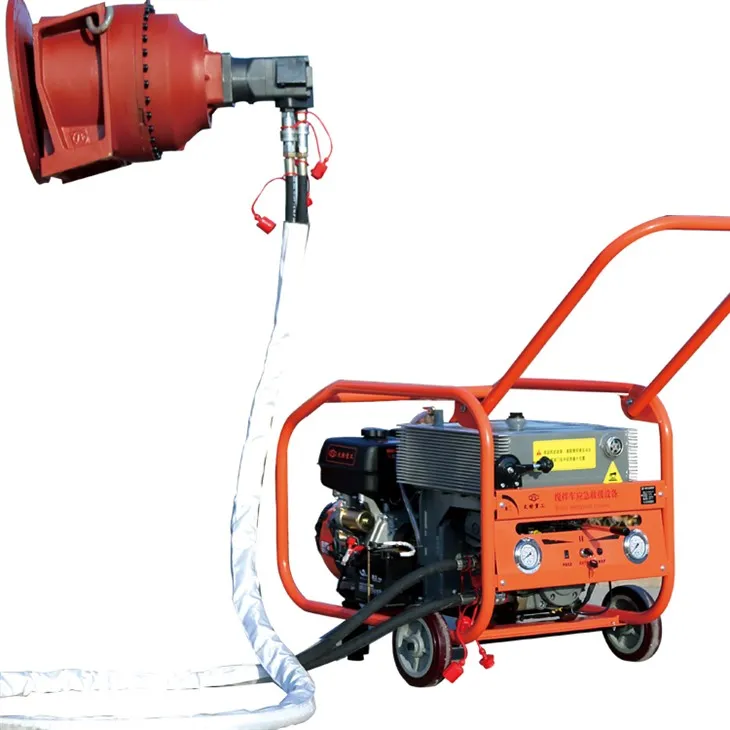
Mixing truck drum rescue equipment, especially those devices designed to maintain drum rotation, is typically designed for emergency rescue in the event of a failure, overturn, or other urgent situations involving the mixing truck drum. Its purpose is to ensure the safety, stability, and controlled rotation of the drum.

PV090 Mixer Truck Hydraulic Pump
PV090 hydraulic pump is a vital component designed specifically for mixer trucks used in the concrete industry. Renowned for its reliability and efficiency, the PV090 pump plays a crucial role in powering the hydraulic system of the mixer truck, enabling the seamless mixing and transportation of concrete. With a robust build and advanced engineering, this pump is tailored to meet the demanding requirements of heavy-duty concrete applications.

T90R75 Mixer Truck Hydraulic Pump
T90R75 Mixer Truck Hydraulic Pump represents a pinnacle of innovation and reliability in the realm of concrete mixing equipment. Engineered for efficiency and durability, this hydraulic pump is specifically designed to meet the demanding requirements of mixer trucks used in construction.
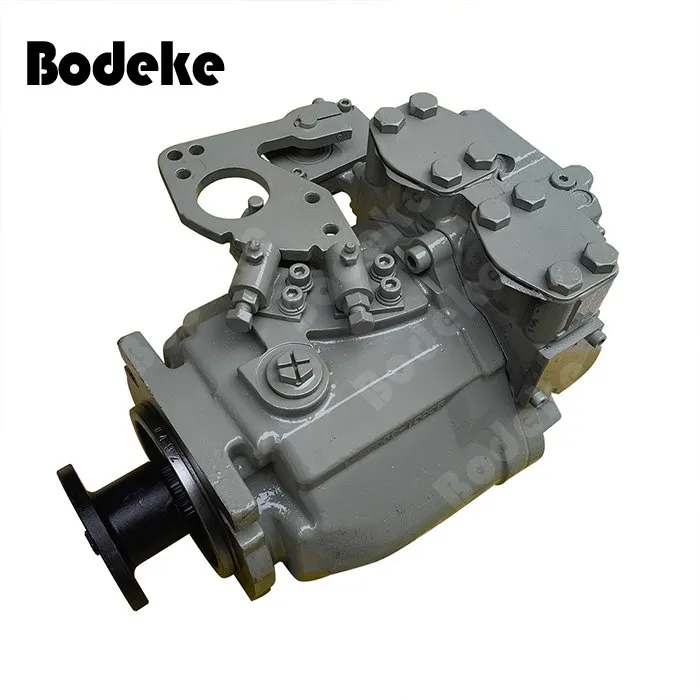
PSVS90C Mixer Truck Hydraulic Pump
PSVS90C Mixer Truck Hydraulic Pump is a cutting-edge solution tailored for the efficient operation of concrete mixer trucks. Renowned for its advanced hydraulic technology and precision engineering, this pump is designed to deliver optimal performance in demanding construction scenarios.

PV070 Mixer Truck Variable Hydraulic Pump
PV070 Mixer Truck Hydraulic Pump is a cutting-edge solution designed to meet the demanding requirements of concrete mixing applications. Engineered with precision and efficiency in mind, this hydraulic pump plays a pivotal role in ensuring the seamless operation of mixer trucks on construction sites.
What is A4VTG90 Mixer Truck Hydraulic Pump?
A hydraulic pump is a mechanical device that converts mechanical power into hydraulic energy. When a hydraulic pump operates, it performs two functions. First, its mechanical action creates a vacuum at the pump inlet which allows atmospheric pressure to force liquid from the reservoir into the inlet line to the pump. Second, its mechanical action delivers this liquid to the pump outlet and forces it into the hydraulic system.
Benefits of A4VTG90 Mixer Truck Hydraulic Pump
High Power Density and Efficiency
Hydraulic pumps are renowned for their high power density, meaning they can generate a large amount of power relative to their size. This is particularly beneficial in applications where space is at a premium. In terms of efficiency, these pumps typically offer efficiencies between 70% and 95%, depending on the type and application. The efficiency is enhanced by the ability to maintain consistent power output with minimal energy loss.
Precision and Control in Operation
Precision and control are hallmark features of hydraulic pumps. They allow for fine control over movement and speed, which is critical in applications such as precision machinery and aerospace. This control is achieved through advanced fluid dynamics, enabling operators to achieve precise positioning with an error margin of less than 0.01%. Additionally, hydraulic pumps can operate at a wide range of speeds, from very slow to very fast, providing flexibility in application.
Durability and Reliability
Durability and reliability are key advantages of hydraulic pumps. They are designed to withstand harsh environments and operate reliably for extended periods. A typical hydraulic pump has a lifespan of 10,000 to 20,000 hours under normal operating conditions. The materials used, such as high-quality metals and alloys, contribute to their robustness and longevity. Furthermore, the design of these pumps minimizes the risk of breakdowns, ensuring consistent performance over time.
Types Of A4VTG90 Mixer Truck Hydraulic Pump
Hydraulic Piston Pump
Hydraulic piston pumps transfer hydraulic liquids through a cylinder using plunger-like equipment to successfully raise the pressure for a machine, enabling it to pull, lift, and push heavy loads. This type of hydraulic pump is the power source for heavy-duty machines like excavators, backhoes, loaders, diggers, and cranes. Piston pumps are used in a variety of industries, including automotive, aeronautics, power generation, military, marine, and manufacturing, to mention a few.
Hydraulic Gear Pump
Internal gear pumps and external gear pumps are the two main types of hydraulic gear pumps. Pumps with external gears have two spur gears, the spurs of which are all externally arranged. Internal gear pumps also feature two spur gears, and the spurs of both gears are internally arranged, with one gear spinning around inside the other.
Both types of gear pumps deliver a consistent amount of liquid with each spinning of the gears. Hydraulic gear pumps are popular due to their versatility, effectiveness, and fairly simple design. Furthermore, because they are obtainable in a variety of configurations, they can be used in a wide range of consumer, industrial, and commercial product contexts.
Vane Pump
Vane pumps are positive displacement pumps that maintain a constant flow rate under varying pressures. It is a pump that self-primes. It is referred to as a "vane pump" because the effect of the vane pressurizes the liquid. This pump has a variable number of vanes mounted onto a rotor that rotates within the cavity. These vanes may be variable in length and tensioned to maintain contact with the wall while the pump draws power. The pump also features a pressure relief valve, which prevents pressure rise inside the pump from damaging it.
Components of A4VTG90 Mixer Truck Hydraulic Pump for Rexroth


Casing
The casing is the hydraulic pump's external part designed to ensure safety for the internal parts. Some pumps use aluminum casings, while others use cast iron castings. The casing's main purpose is to prevent fluid from splashing outside the pump. The component also prevents the hydraulic system from getting damaged if a heavy weight falls on the system.
Runner Vanes
There is a rotary part of the hydraulic pump known as a runner that rotates inside the pump casing. A number of vanes rotate along with the rotation of the runner. The fluid inside the pump also rotates with the rotation of the runner vanes. The result is an increase in fluid pressure. In addition, these vanes are also essential for cooling the system and lubricating it.
Shaft
A shaft is used to assemble the runner. A steel or stainless steel shaft is used for the assembly. The shaft size can be adjusted based on the runner.
Bearings
For the runner to rotate, bearings are needed. The hydraulic system and pump rely heavily on this component.
Sealing
Fluid leaks from the pump can be prevented by the seal. Pumps usually fail because bearing components are damaged. Bearing components can be protected from contaminants and coolants by means of a seal.
Oil Storage Tank
It contains non-compressible fluids (including hydraulic oil). The tank also protects the hydraulic oil from contamination. In this way, the storage tank keeps the hydraulic system in good working order.
Pipeline
A pipeline inside a system is easy to install, but the most important thing is that it transports hydraulic fluid between different parts of the system.
Electric Motor
Motors are used to drive the driving shaft inside the system. From there, the driver gear is driven. An electric motor is thus used to power the pump.
Hydraulic Actuator
A hydraulic actuator is a component that transforms hydraulic energy into mechanical power in order to accomplish the desired effect.
Relief Valve
The relief valve controls the pressure within the hydraulic system. Different types of relief valves are available. By means of a pressure relief valve, excess fluid pressure is returned to the inlet.
Hydraulic pumps have a wide range of applications in different industries.
Automotive Industry
In the automotive industry, hydraulic pumps are combined with jacks and engine hoists for lifting vehicles, platforms, heavy loads, and pulling engines.
Mechanical Workshops
In mechanical workshops, hydraulic pumps power tools for applications such as cutting, drilling, pressing, and pulling.
Wood Workshops
In wood workshops, hydraulic pumps are used in splitters.


Process and Manufacturing
Heavy-duty hydraulic pumps are used for driving and tapping applications, turning heavy valves, tightening, and expanding applications.
Heavy Machinery
Hydraulic pumps are used in heavy machines such as excavators, cranes, loaders, and tractors.
Production Facilities
Hydraulic pumps are also used in conveyors, mixers, and forklifts.
Open-loop or Closed-loop
Open-loop covers approximately 75 per cent of applications and is the most common type for industrial hydraulic systems. Hydraulic circuits are configured with return lines open to atmosphere. Open-loop systems provide flexibility for multi-axis applications and scope for future upgrades. Closed-loop are most commonly used on mobile plant and cranes. Closed-loop systems have return lines piped directly back to the pump inlet. This avoids the need for control valves and provides accurate, compact control. Closed-loop systems are best suited to rotary type actuators but can also be used with cylinders for applications such as steering.
Flow Rate
Pumps typically have maximum flow ratings in gallons per minute or liters per minute, which tell you how much they can move and may determine its ability to meet your needs. Start by determining the flow rate required for the application, then factor-in the inevitable loss of efficiency due to component wear and leakage in system components. This gives a required flow rate for the pump.
Pressure
A pump does not create pressure, it only creates flow. It generates flow with enough power to overcome pressure induced by the load at the pump outlet. If the outlet is connected straight back to tank there will be no pressure; if connected to a cylinder, it will generate the pressure required to lift the load. The maximum operating pressure varies between different types of pumps. For example, the nominal pressure for a vane pump might be 100 bar whereas a radial piston pump could be rated at 700 bar.
Power
Hydraulic power is defined as flow multiplied by pressure. It is best to calculate the power required by the hydraulic system. Beware of guesstimating the pump's power by looking at a pump on a similar application, as that pump may have been over-specified.
Speed
Different types of hydraulic pump have higher or lower operating speeds. For example, the maximum speed of an external gear pump might be 4000 RPM but a bent-axis piston pump might only operate up to 3000 RPM. Running a pump at a lower speed than its optimum rated speed usually results in reduced efficiency, so care needs to be taken to ensure the pump's speed and flow rate match the application's requirements. Note that the efficiency of the driving unit, whether an electric motor or internal combustion engine, will also depend on the speed.
Hydraulic Fluids
The fluid used in your hydraulic system should also match the pump's specifications. Most pumps will work well with standard hydraulic fluid, which is usually based in mineral oil. It has inherently good lubrication properties with a higher boiling point than water. Other types of fluid that you may need for specific applications include biodegradable hydraulic fluids, synthetic fluid and Water glycol fluids. These fluids are not interchangeable with every pump, and finding one that works with your fluid needs is vital to choosing the best industrial hydraulic pump for your operation.
Frequently Asked Questions
Hot Tags: A4VTG90 Mixer Truck Hydraulic Pump for Rexroth, China A4VTG90 Mixer Truck Hydraulic Pump for Rexroth, PMB M90 Mixer Truck Hydraulic Motor, TMM070 Mixer Truck Hydraulic Motor, A4VTG71 Mixer Truck Hydraulic Pump, PV070 Mixer Truck Variable Hydraulic Pump, Mixer Truck Hydraulic Pump, AA2FM90 Mixer Truck Hydraulic Motor
Send Inquiry
