In-Depth Analysis of Welding Robot Technology:
Industry Transformation and Future Prospects in the Era of Intelligent Manufacturing
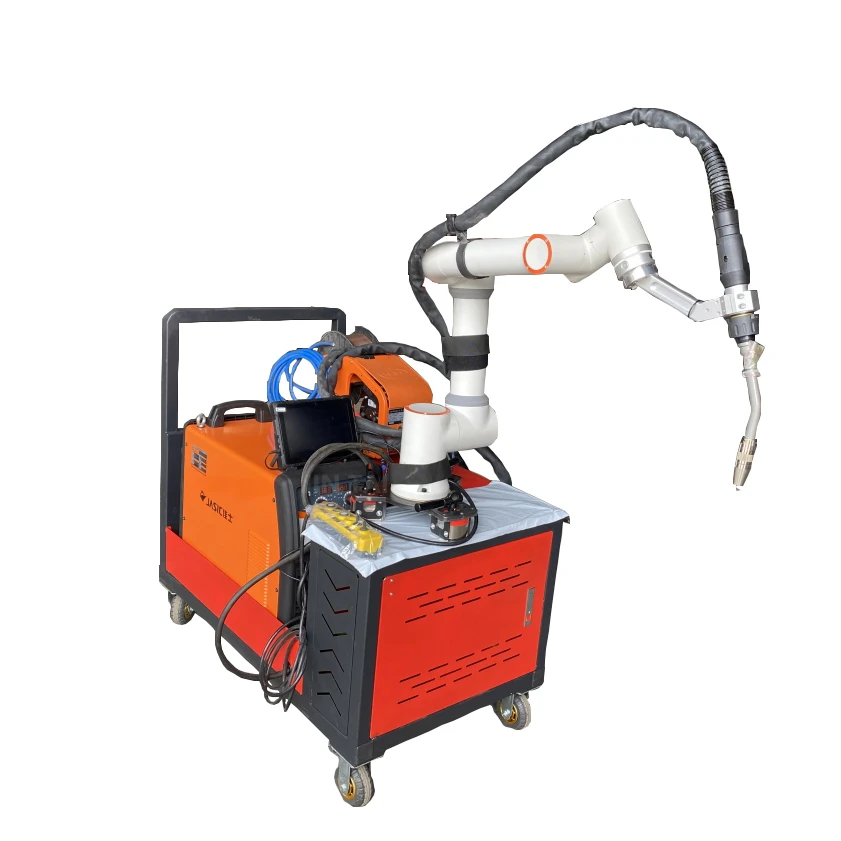
Introduction: Welding Robots Reshaping the Manufacturing Landscape
Amid the global wave of intelligent manufacturing transformation, welding robots have become a core equipment in modern industrial production, gradually replacing traditional manual welding due to their advantages of high precision, efficiency, and stability. From automotive manufacturing to aerospace, from precision electronics to heavy machinery production, the application scope of welding robots continues to expand, driving the manufacturing industry toward automation, digitalization, and intelligence.
I. Core Technologies and Current Development of Welding Robots
1. Main Types of Welding Robots
The most common welding robots on the market today include:
Arc Welding Robots: Suitable for MIG/MAG (Metal Inert Gas/Active Gas Welding), TIG (Tungsten Inert Gas Welding), and other processes, widely used in automotive body welding, pipeline welding, and more.
Spot Welding Robots: Primarily used for sheet metal joining in automotive manufacturing, featuring high speed and repeatability.
Laser Welding Robots: Ideal for high-precision welding, such as batteries and electronic components, offering minimal thermal distortion and superior weld aesthetics.
Collaborative Welding Robots (Cobots): Lightweight and easy to program, designed to work safely alongside human operators, suitable for flexible production needs.
2. Key Technological Breakthroughs
Recent advancements in welding robot technology include:
Intelligent Sensing and Vision Guidance: Utilizing 3D vision and laser scanning for automatic seam recognition and path planning, improving welding accuracy.
Adaptive Control Technology: Real-time monitoring of welding current, voltage, and temperature to dynamically adjust welding parameters, ensuring consistent quality.
Digital Twin and Simulation Optimization: Virtual simulation optimizes welding paths and parameters in advance, reducing trial-and-error costs.
II. Industry Applications and Case Studies of Welding Robots
1. Automotive Manufacturing
Welding robots play a central role in automotive production, for example:
Tesla Gigafactories: Fully automated welding lines complete body welding and riveting, increasing production efficiency by over 50%.
Flexible Production Lines in Traditional Automakers: Companies like Volkswagen and Toyota use collaborative welding robots for mixed-model production, reducing changeover time.
2. Aerospace and Shipbuilding
Aircraft Fuselage Welding: High-precision laser welding robots ensure the strength and sealing of aerospace aluminum alloys.
Shipbuilding Plate Welding: Multi-robot collaboration automates large-scale hull welding, minimizing manual intervention.
3. New Energy Industry
Power Battery Welding: Laser welding robots handle battery tabs and casing welding, ensuring high consistency and safety.
Hydrogen Fuel Tank Welding: Automated welding of carbon fiber composites meets stringent process requirements for high-pressure vessels.
III. Future Trends and Challenges
1. AI + Welding: The Next Level of Intelligence
Deep Learning for Process Optimization: AI algorithms analyze vast welding data to recommend optimal parameters, reducing setup time.
Autonomous Decision-Making & Defect Detection: Machine vision and AI-powered inspection identify defects (e.g., porosity, cracks) in real time and adjust accordingly.
2. Human-Robot Collaboration and Flexible Manufacturing
Safer Cobots: Advanced force control and collision detection enable seamless cooperation between robots and workers.
Modular Welding Cells: Standardized workstations allow quick deployment for small-batch, high-variability production.
3. Green Welding and Sustainability
Low-Energy Welding Techniques: Processes like Cold Metal Transfer (CMT) reduce heat input and fume emissions.
Recycling & Remanufacturing: Older robots can be upgraded with new control systems and components to extend their lifespan.
4. Industry Challenges
High Initial Investment Costs: SMEs may struggle with automation upgrade expenses.
Shortage of Skilled Labor: Programming and maintaining welding robots require specialized expertise.
Challenges in Welding Special Materials: Joining dissimilar metals and composites demands further R&D.
IV. Conclusion: Welding Robots Driving the Future of Manufacturing
With advancements in AI, IoT, and 5G, welding robots are evolving from "automated" to "intelligent," becoming a cornerstone of Industry 4.0. In the future, they will become more flexible, eco-friendly, and deeply integrated with human workers to propel high-quality industrial development.
For businesses, adopting welding robot technology early and optimizing production processes will be key to staying competitive. Meanwhile, governments, universities, and enterprises must collaborate to cultivate skilled professionals and foster continuous innovation.
Founded in 2015, Taiyuan Jintai Technology Co., LTD. is a leader in hydraulic equipment remanufacturing. Near Shanxi Province's capital, we've grown rapidly, forming strong partnerships nationwide. We produce, sell, and maintain hydraulic drive accessories, including plunger pumps, motors, and reducer assemblies. Our commitment to top-quality products is matched by our comprehensive service. Our expertise allows us to offer tailored solutions, prioritizing technology for reliable, high-performing products. Adhering to "integrity-based, winning with quality," we attract talent, enforce strict quality control, and foster unity. Our mission is to deliver exceptional products and services, building the "Bodeke" brand for a brighter future.
01
Rich Product Variety
Our main products include engineering hydraulic drive accessories, plunger pumps, motors, and reducer assemblies and other engineering equipment.
02
High Quality
By prioritizing technology and scientific processes in our operations, we ensure the production of reliable products that garner positive acclaim from users. Our products are distinguished by an exceptional blend of high performance and cost-effectiveness, making them a standout choice in the market.
03
Rich Experience
Our company was established in 2014. After years of development and technological progress, our company has rich production and manufacturing experience and has become a premier manufacturer specializing in the remanufacturing of hydraulic equipment.
04
Leading Service
We have many years of industry experience and a complete production management, quality supervision, sales service operation system. Whether you want to buy engineering hydraulic drive accessories or plunger pumps, just send your requirements by email and we can customize the product for you.
our Partners
We have worked with many of the world's leading brands,and almost all of our co-operators have been satisfied with our products and services,and have continued their co-operation for many years. We are looking forward to your enquiry,let's cooperate and win together!
We trusted by